

Where beautiful invitations BEGIN.
A guide to the pieces that make up a thoughtfully designed wedding invitation suite
Designing your invitation SUITE
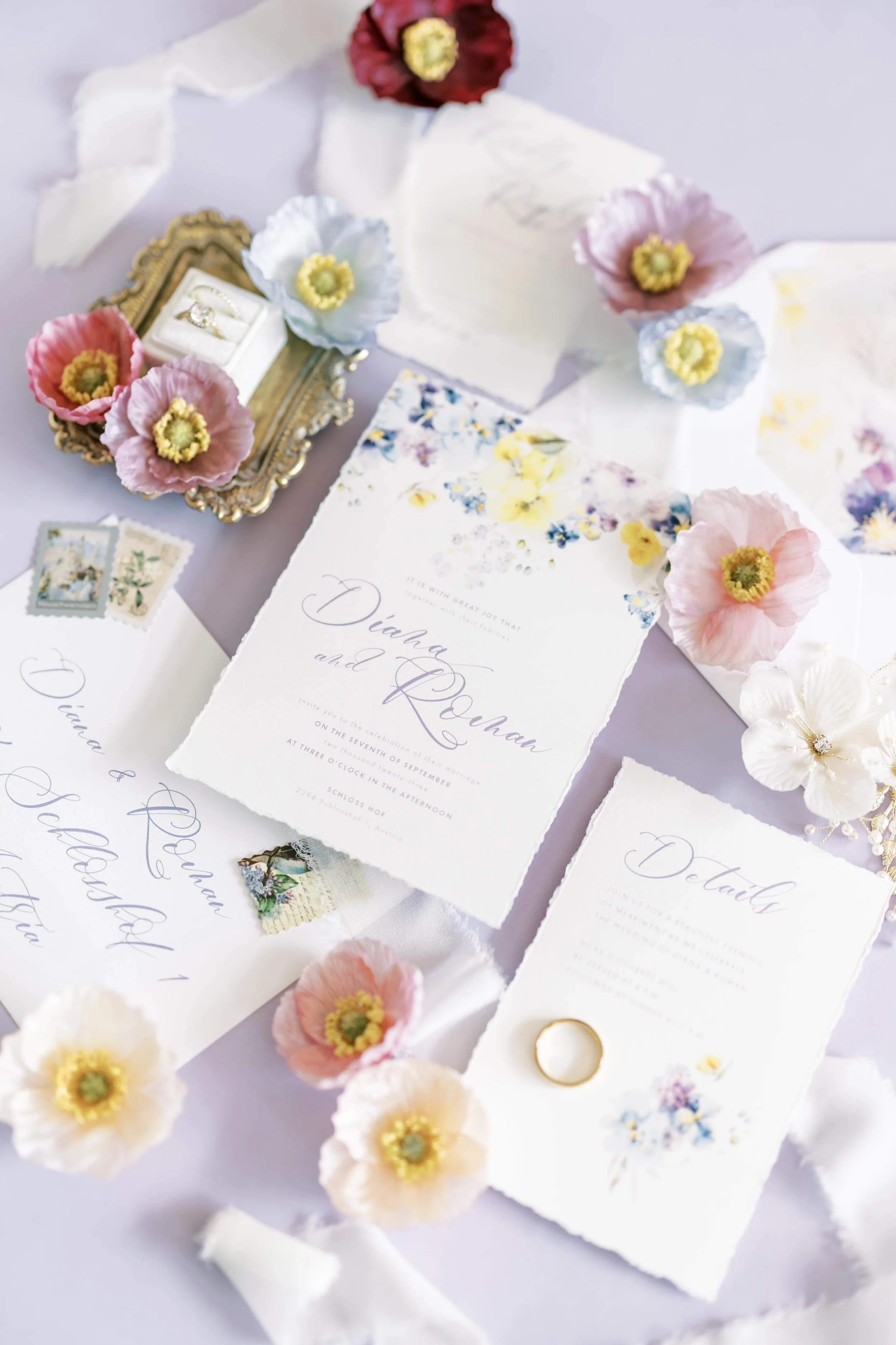
Your wedding invitation suite is the first glimpse guests receive of your celebration.
From the paper and printing style to the information included inside, every piece works together to communicate both the logistics and the aesthetic of your wedding day.
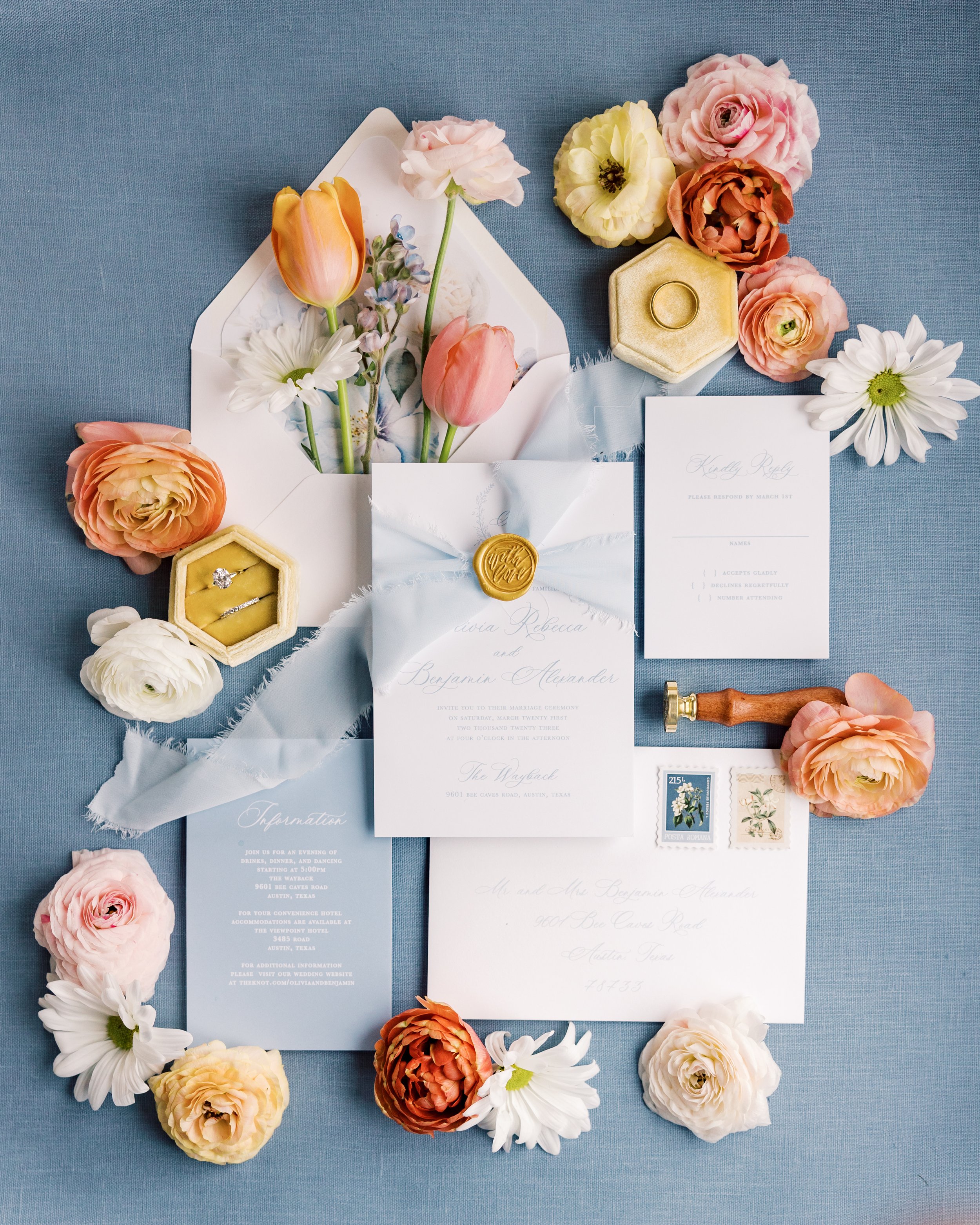
A well-designed suite typically includes several coordinated pieces that guide guests through the details of the event.
EXPLORE OUR PREFERRED VENDORS

Invitation SUITE pieces
-
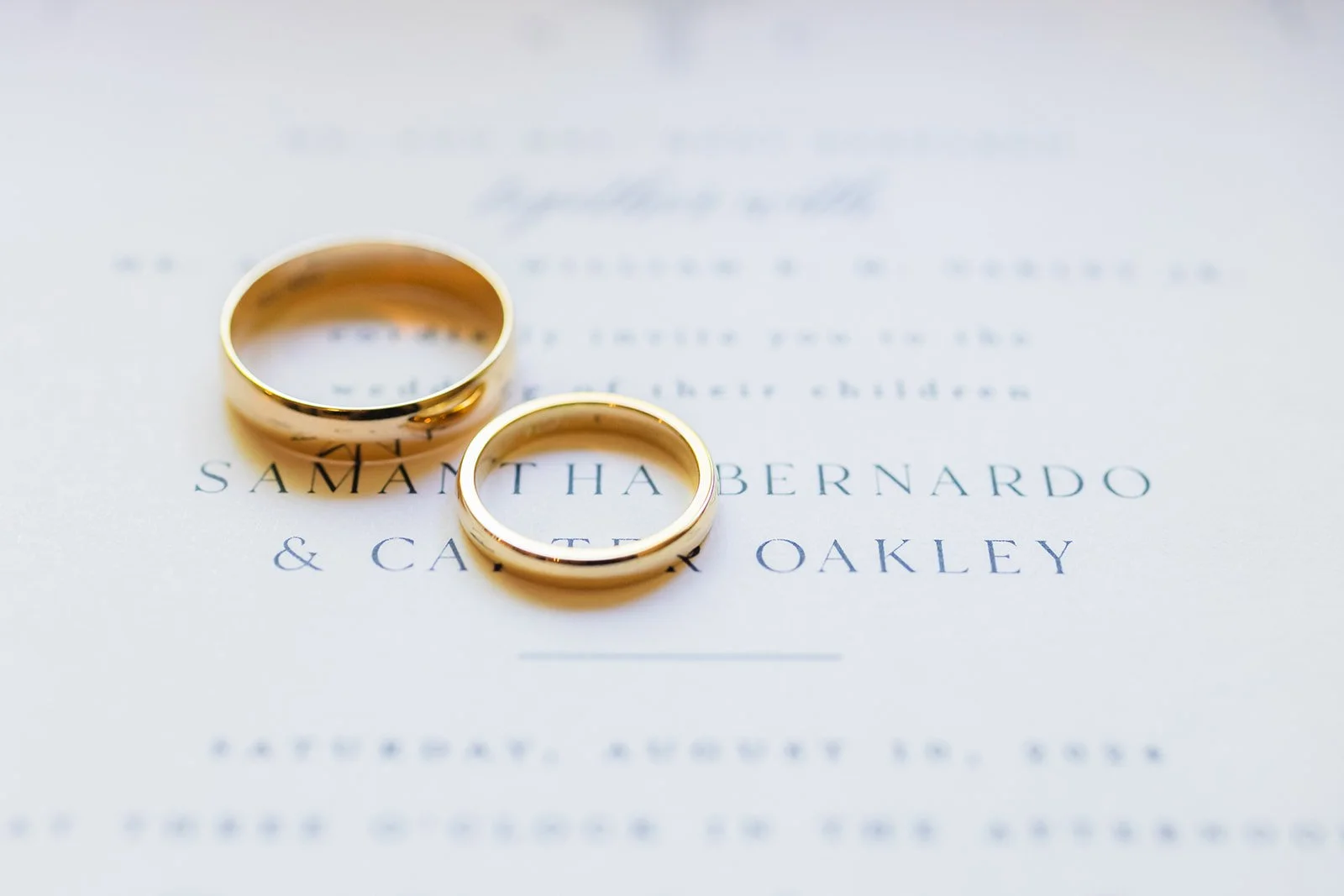
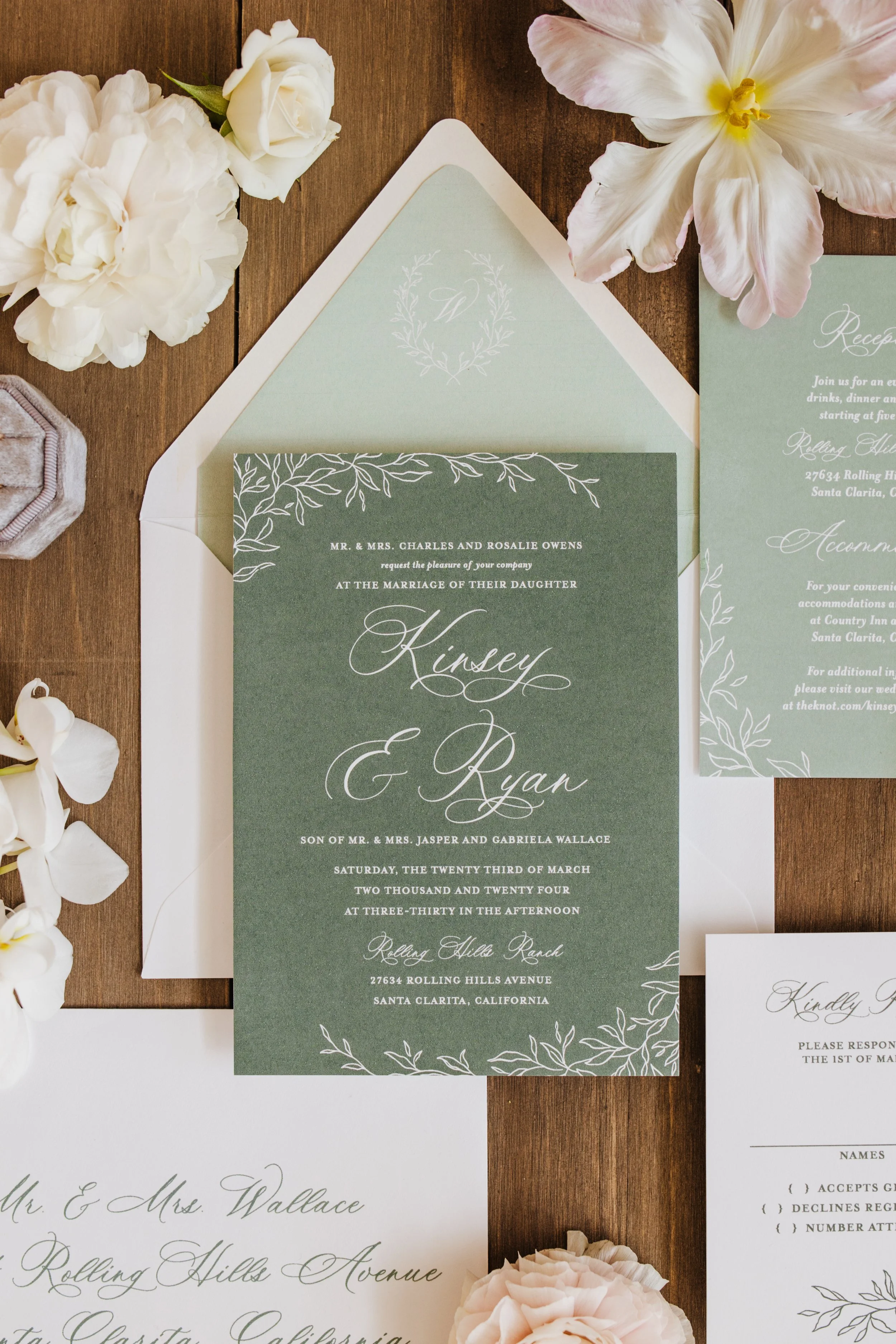
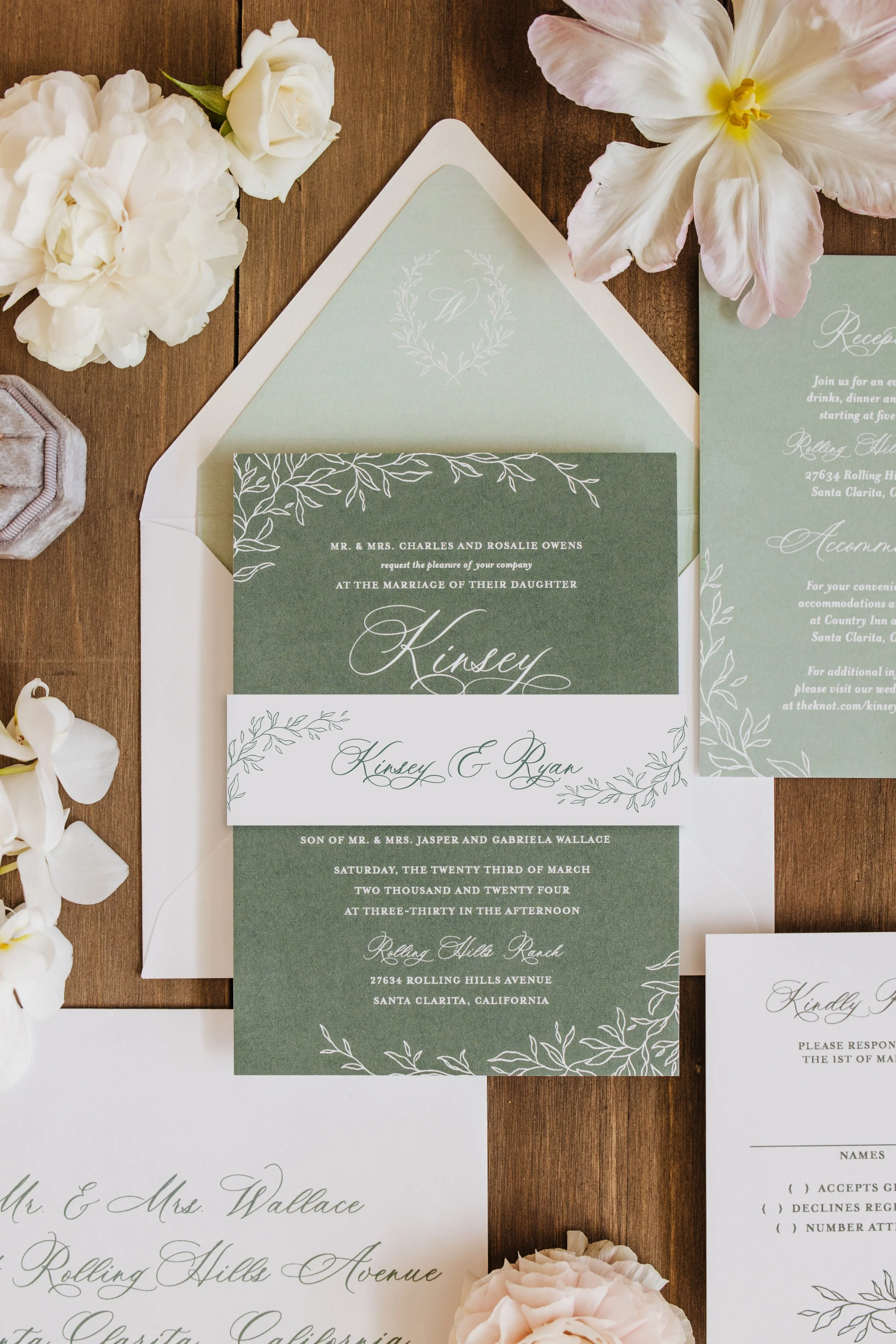
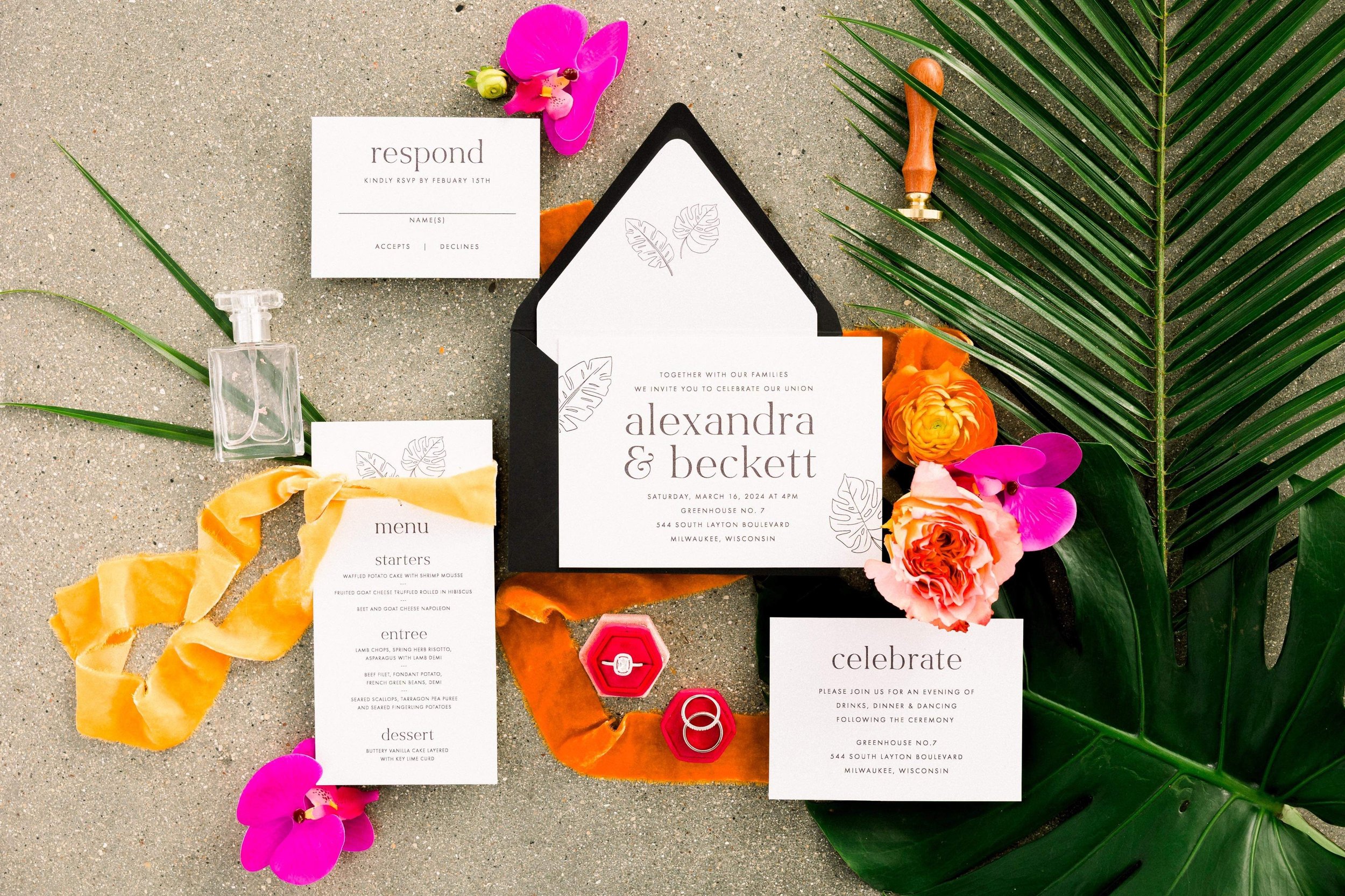
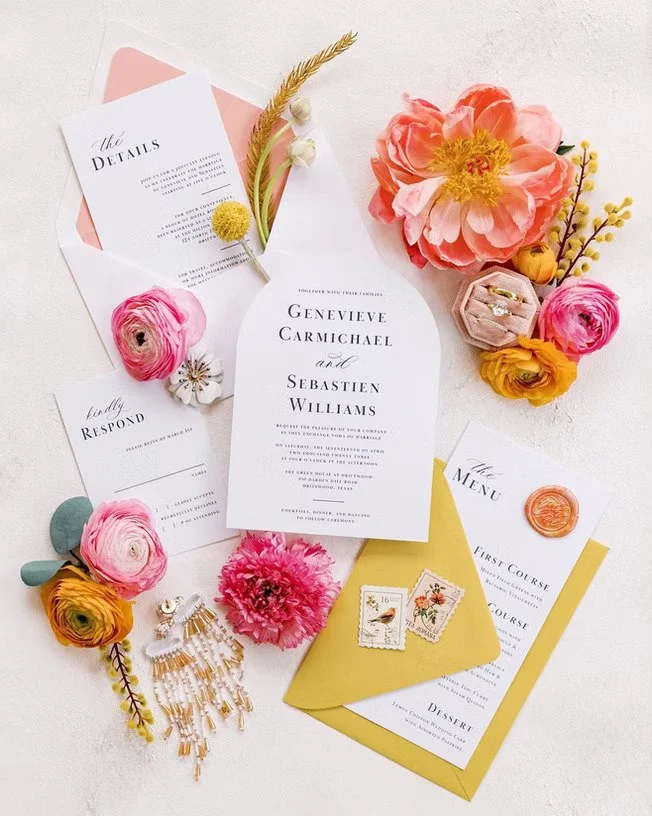
The signature piece of your suite, the invitation formally invites guests to your wedding and establishes the aesthetic tone for the celebration.
This card typically includes:
The couple’s names
Ceremony date and time
Ceremony location
Traditionally in Western weddings, the bride’s name is listed first.
Planner Tip: If including a street address, omit the zip code to maintain a refined appearance.
-
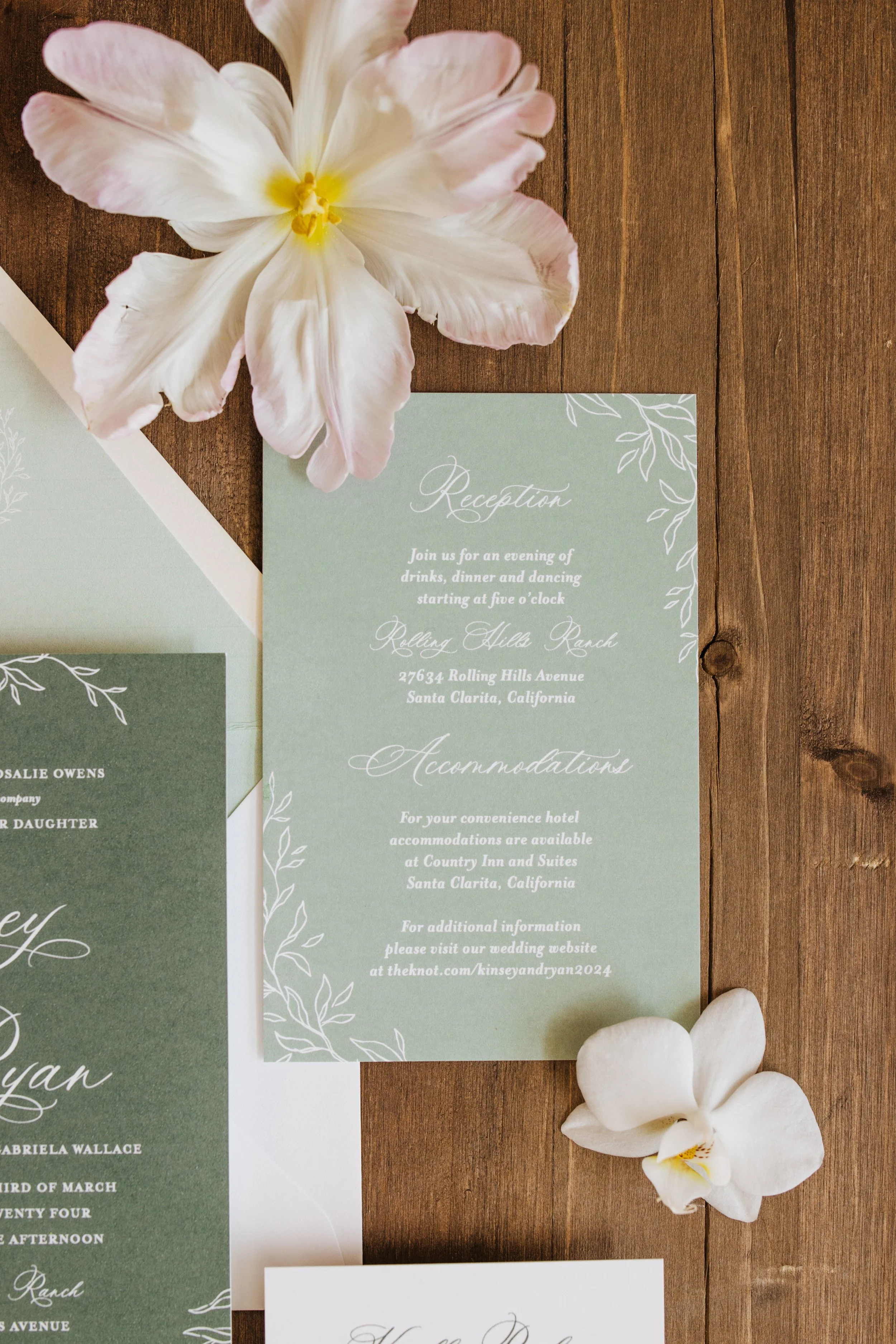
A carefully curated insert that shares the additional details of your celebration.
This card commonly includes:
Reception information
Transportation details
Hotel accommodations
Your wedding website
It may also include RSVP instructions if you are collecting responses online instead of through traditional mailed reply cards.
Planner Tip: Registry information should not be included in your invitation suite. Guests can easily find your registry through the wedding website listed on this card.
-
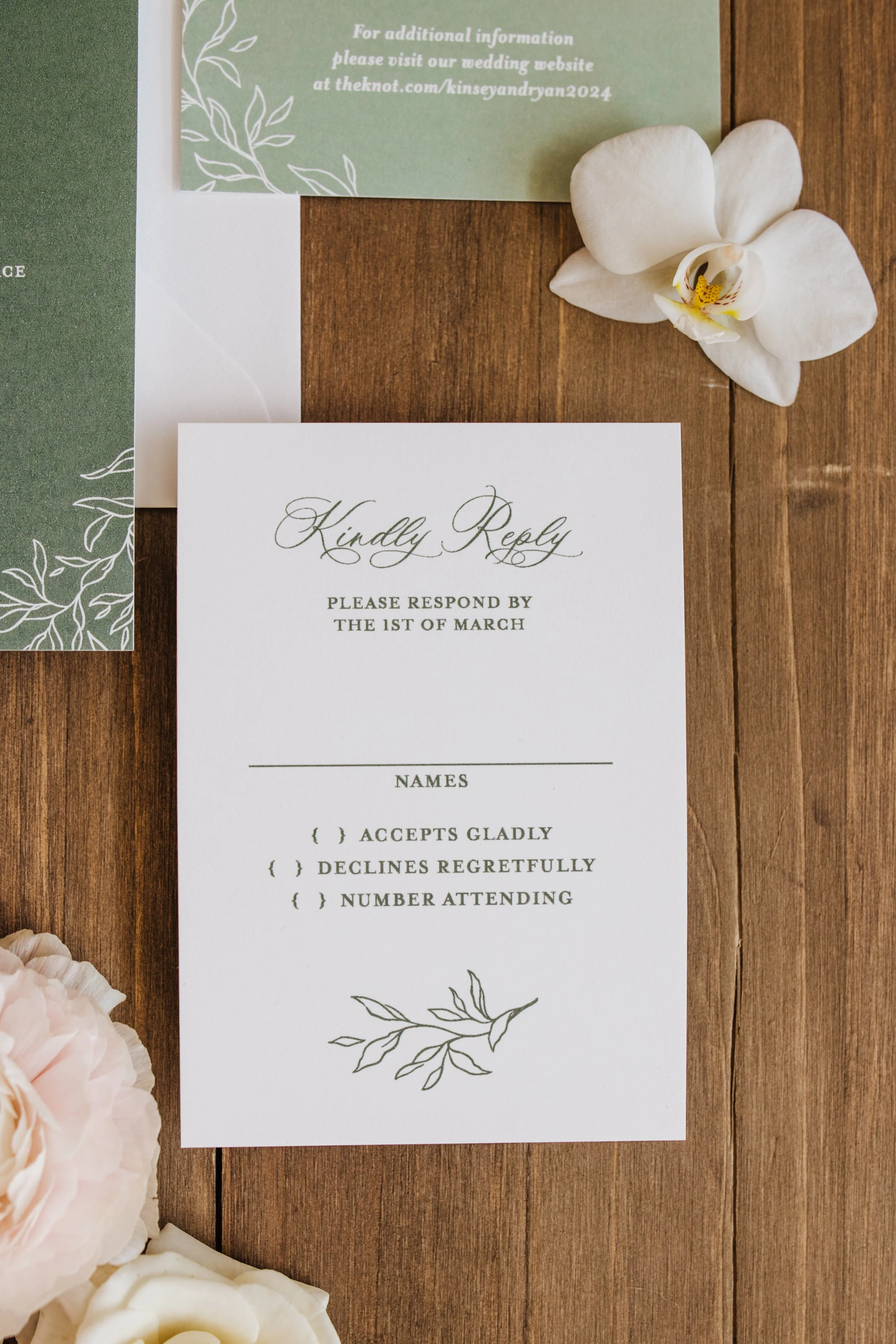
A smaller card that allows guests to confirm attendance and share meal selections.
This traditional element simplifies guest responses and helps you gather your final guest count while maintaining the refined experience of a mailed invitation suite.
-
A pre-addressed and stamped envelope included for guests returning RSVP cards.
This envelope should be addressed to the person responsible for managing the guest list, often a parent or the couple.
-
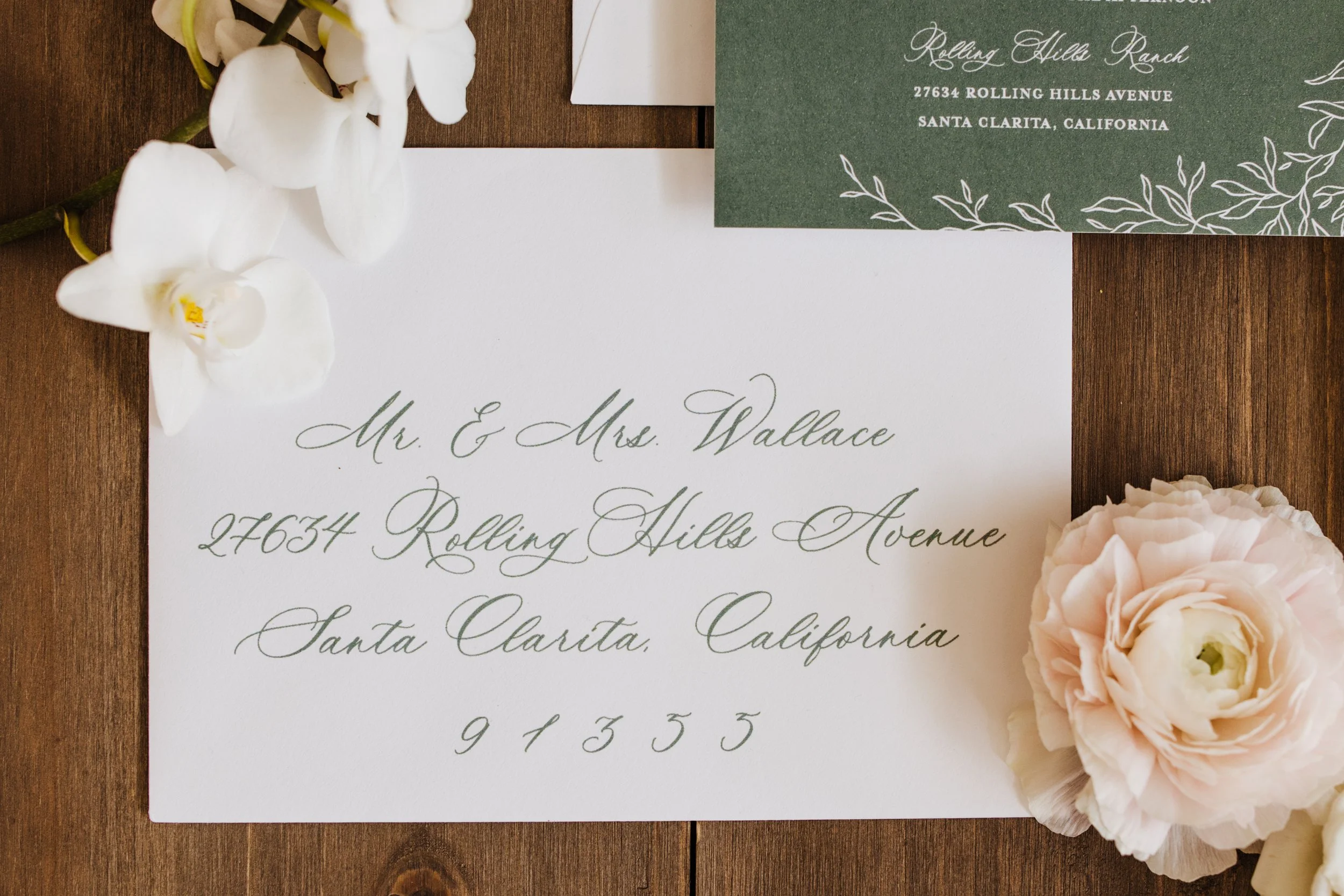
The outer envelope protects the invitation suite while creating the first physical impression for your guests.
It typically includes:
Guest addressing on the front
The couple’s return address on the back flap
Traditionally, envelopes are hand-addressed either by the couple or a calligrapher.
Planner Tip: Avoid printed labels whenever possible, as they detract from the elegance of the suite.
-
These elements add texture, dimension, and personality to your suite.
ENVELOPE LINER
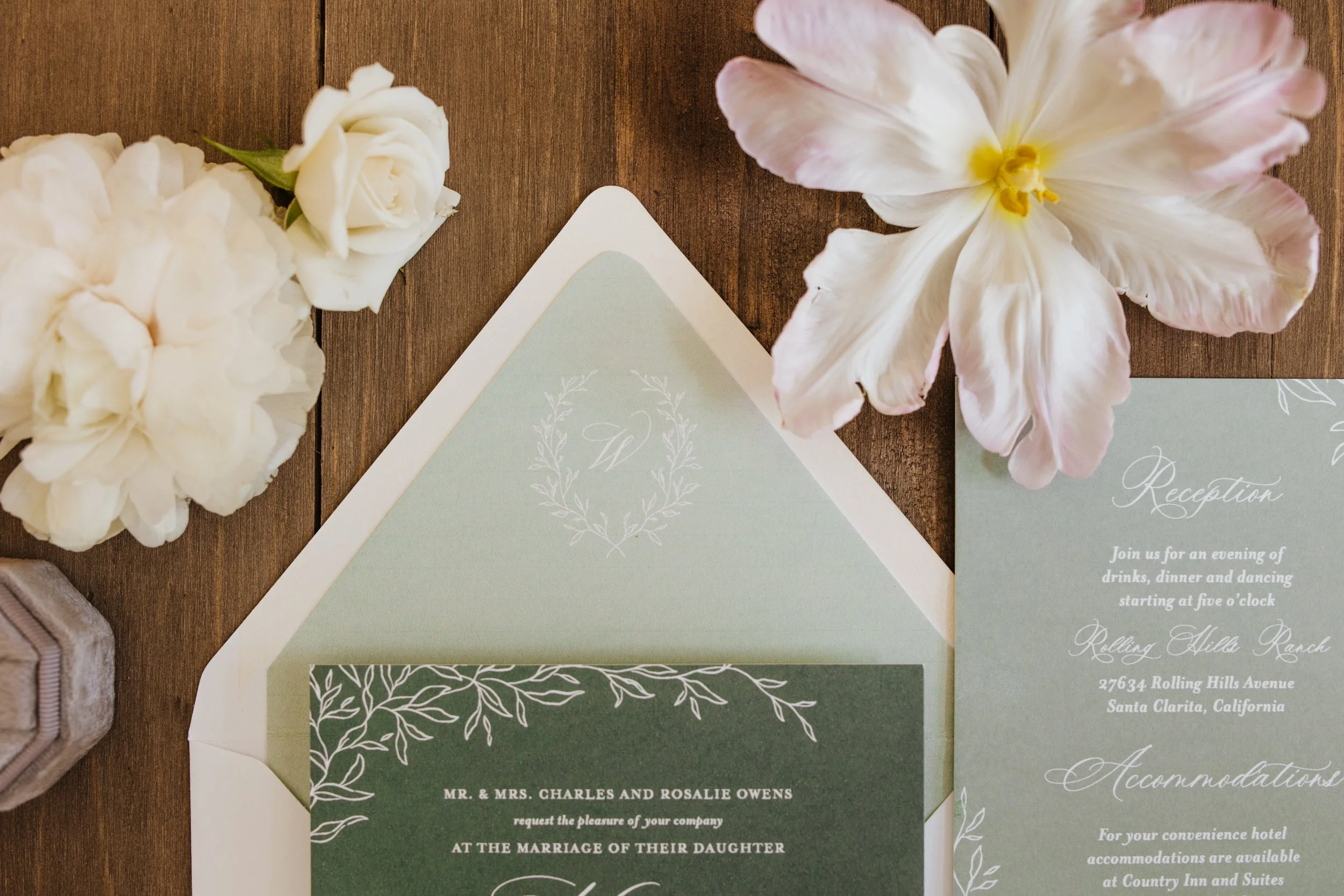
A decorative liner revealed when the envelope is opened. Liners can feature a color, pattern, monogram, or artwork pulled from the invitation design.
They are especially effective when using white envelopes, adding visual interest and polish.
BELLY BAND
A narrow wrap that gathers the suite together, often printed with a monogram, crest, or wedding date.
RIBBON WRAP
A soft ribbon tied around the suite for a romantic, tactile presentation.
Because ribbon adds bulk, it may require additional postage or non-machinable mailing fees.
WAX SEAL
A classic embellishment that adds texture and timeless sophistication to the invitation suite.
VELLUM WRAP
A translucent vellum overlay that softly encloses the suite, creating a layered presentation and a sense of anticipation as guests reveal each piece.
Postage & Mailing
MOST INVITATION SUITES REQUIRE:
2 oz postage for the outer envelope
A Forever stamp for the RSVP envelope
Embellishments such as ribbon wraps, belly bands, wax seals, and vellum overlays can increase both the weight and thickness of your suite and may require additional postage or non-machinable surcharges.
Planner Tip: Always bring a fully assembled invitation suite to the post office to be weighed before mailing.
Invitations should be handed directly to a postal worker rather than dropped in a mailbox to ensure they are processed with care.
Printing styles
The printing method you choose greatly influences both the aesthetic and cost of your invitation suite.
-
The most economical option.
Ink is printed directly onto the paper with no texture or impression. Digital printing allows for full color designs and is ideal for couples seeking a refined yet budget-conscious invitation suite.
-
Both methods use a custom plate created from the invitation artwork.
Letterpress presses ink into the paper, creating a subtle impression and texture.
Foil stamping uses heat to transfer metallic foil onto the paper using the same plate process.
Because these methods require custom plates and manual press work, they are more labor intensive and therefore more expensive.
-
Embossing creates a raised, three-dimensional impression on the surface of the paper using two plates that press the design into the cardstock.
This technique adds elegant texture and depth to the design
-
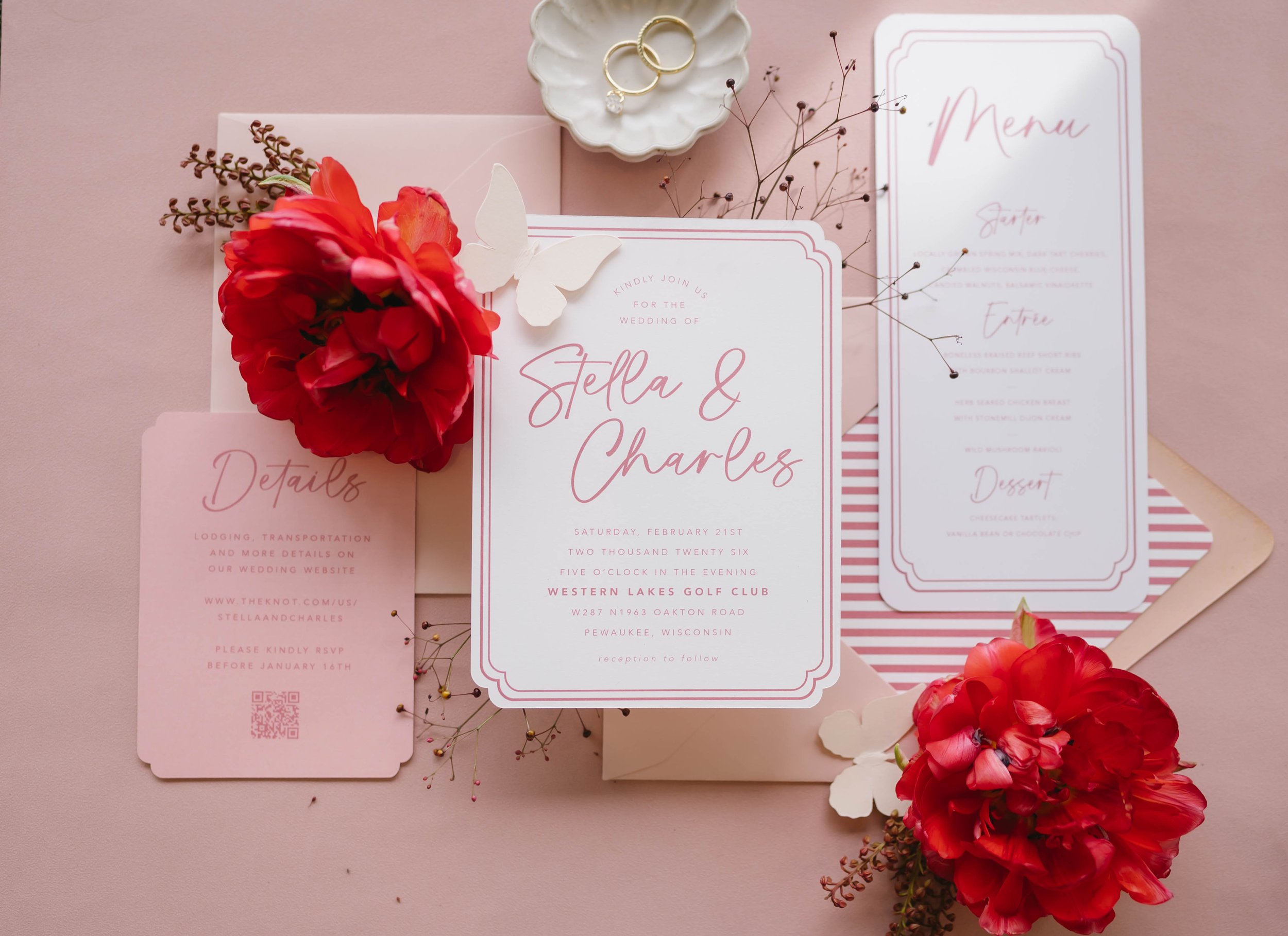
Die cutting allows invitations to be trimmed into custom shapes rather than traditional rectangles.
This process uses either a metal die or laser cutting to create unique silhouettes. The more intricate the shape, the more complex and costly the production.